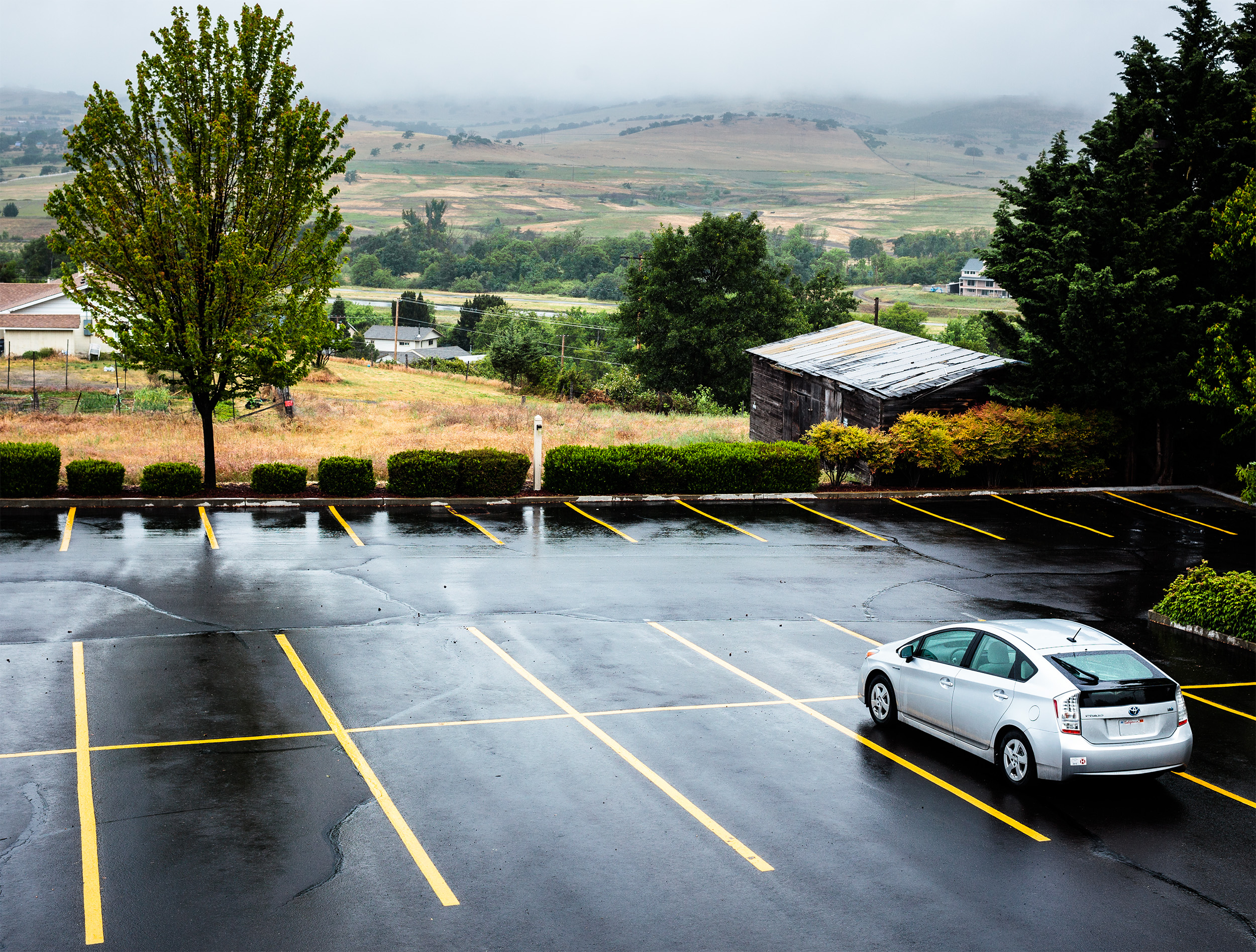
Among our top stories: why we should think about shrinking parking spaces as a first step to ending parking minimums altogether, the real problem with new American suburbs (hint: it’s not uncontrolled growth), and an unusual decorating practice in the Netherlands that brings neighbors together.
Read MoreNew York’s newest BRT line is being called the “Miracle on 14th Street.” But why is it so miraculous?
Read MoreIt’s an uncomfortable truth: doing the right thing for our communities usually means doing the hard thing. Or at least the less easy thing. What does this mean not only for the people who design our cities and towns but for those of us who live there?
Read MoreSo you want to invest in real estate in your town—but you’re not so keen on taking out a mortgage and rolling up your sleeves. Is there another way to buy in to your community’s future?
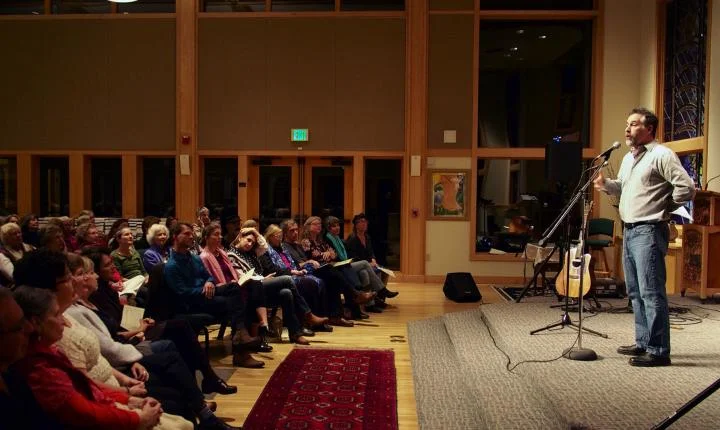
Read MoreUsing innovative storytelling events, an Oregon-based nonprofit is helping communities throughout the US and UK transform residents into neighbors, enemies into friends, and towns into communities.
Read MoreThe executive director of The Hearth talks about the power of community storytelling to connect us to one another, make us more compassionate, and deepen our attachment to our towns and cities.
Read MoreIn the age of Nextdoor and Facebook, many have (understandably) lost faith in the humble neighborhood association. But visit the oldest neighborhood association in Denton, Texas and you’ll discover why they can still play a big role in building strong towns.
Read MoreThe problem with new American suburbs isn’t a "lack of planning" or “uncontrolled growth” or “inadequate infrastructure.” The problem is a lack of basic financial solvency.
Read MoreThe ecological and economic benefits of having street trees are well-known. As one community is discovering, the process of planting trees comes with benefits all its own.
Read MoreIn an age of near-constant change, should cities be making decisions based on trends, platforms, and even whole industries that may not be around in a few years? Two of the most disruptive industries hold some surprising answers.
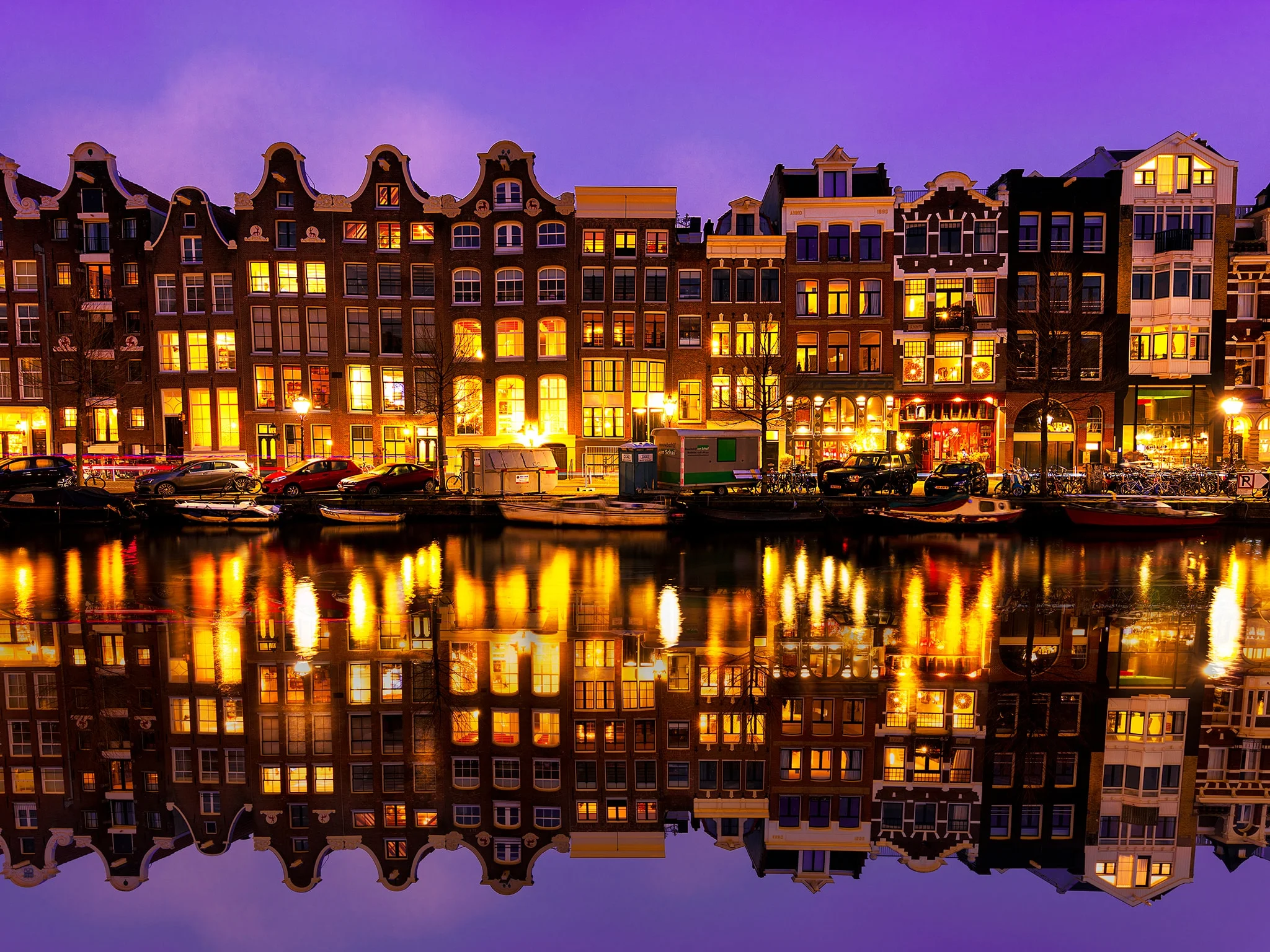
Read MoreAn unusual cultural practice in the Netherlands reveals the benefits of seeing your neighborhood…and being seen by it.
Read MoreOne of our heroes here at Strong Towns has helped pioneer a simple but powerful process for building neighborhood wealth and strengthening community ties. This approach is absolutely transforming his city of Oswego, New York. We think you should copy it.
Read MoreStrong Towns member Andrew Kelsey shares how you can create a value per acre analysis for your city or town—no matter your skill level.
Read MoreThe most brilliant innovations in building cities are already embodied in the traditional development pattern, a foolproof approach to creating resilient and productive places that was developed the hard way.
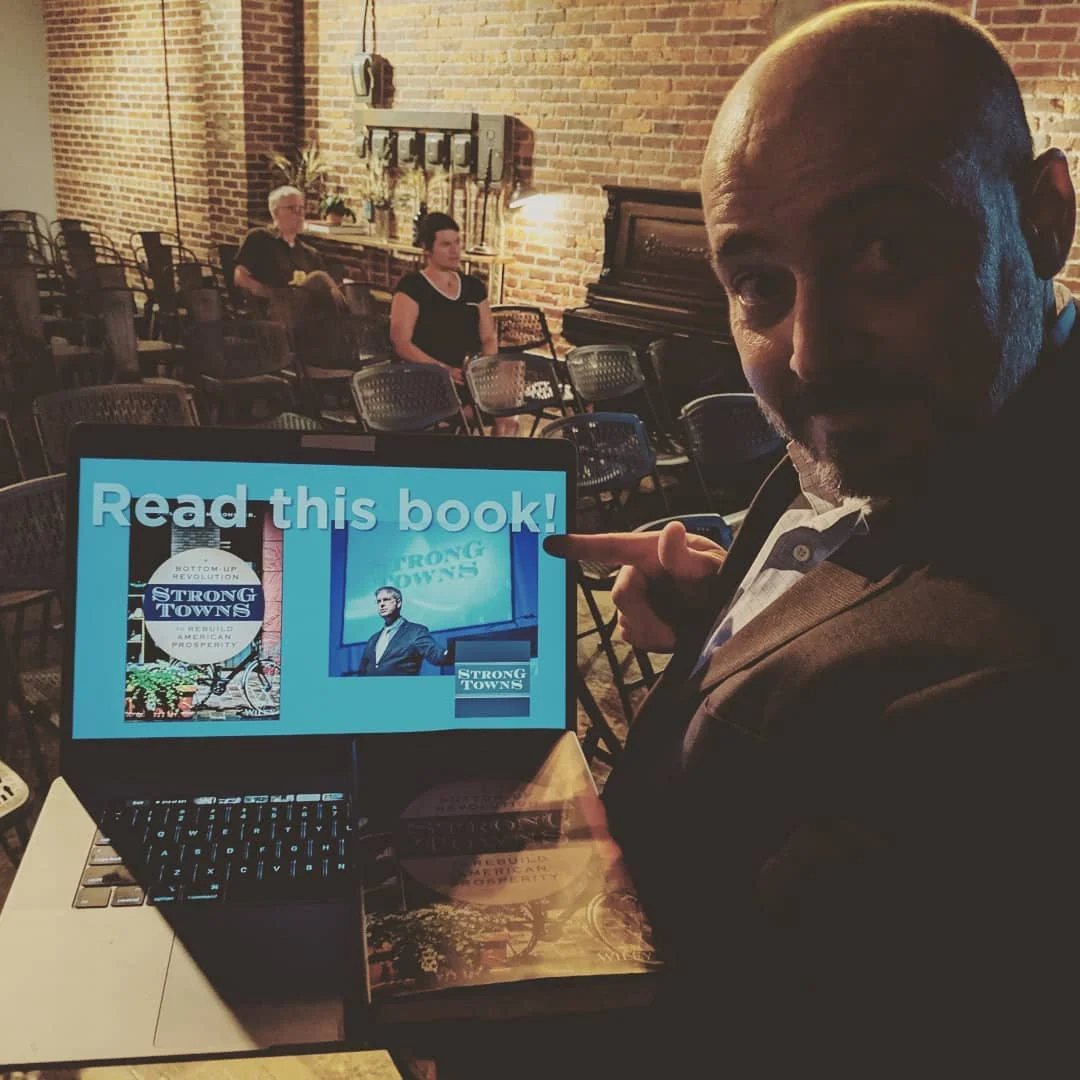
Read MoreThe Strong Towns book has been out for a week and a half—and the most gratifying thing is to see those who have read and reviewed it reflect our message back to us in their own powerful, insightful words. Do you have your copy yet?
Read MoreTransportation for America has boldly laid out three key principles they say should govern federal transportation policy. That’s a great start. But here’s a fourth.
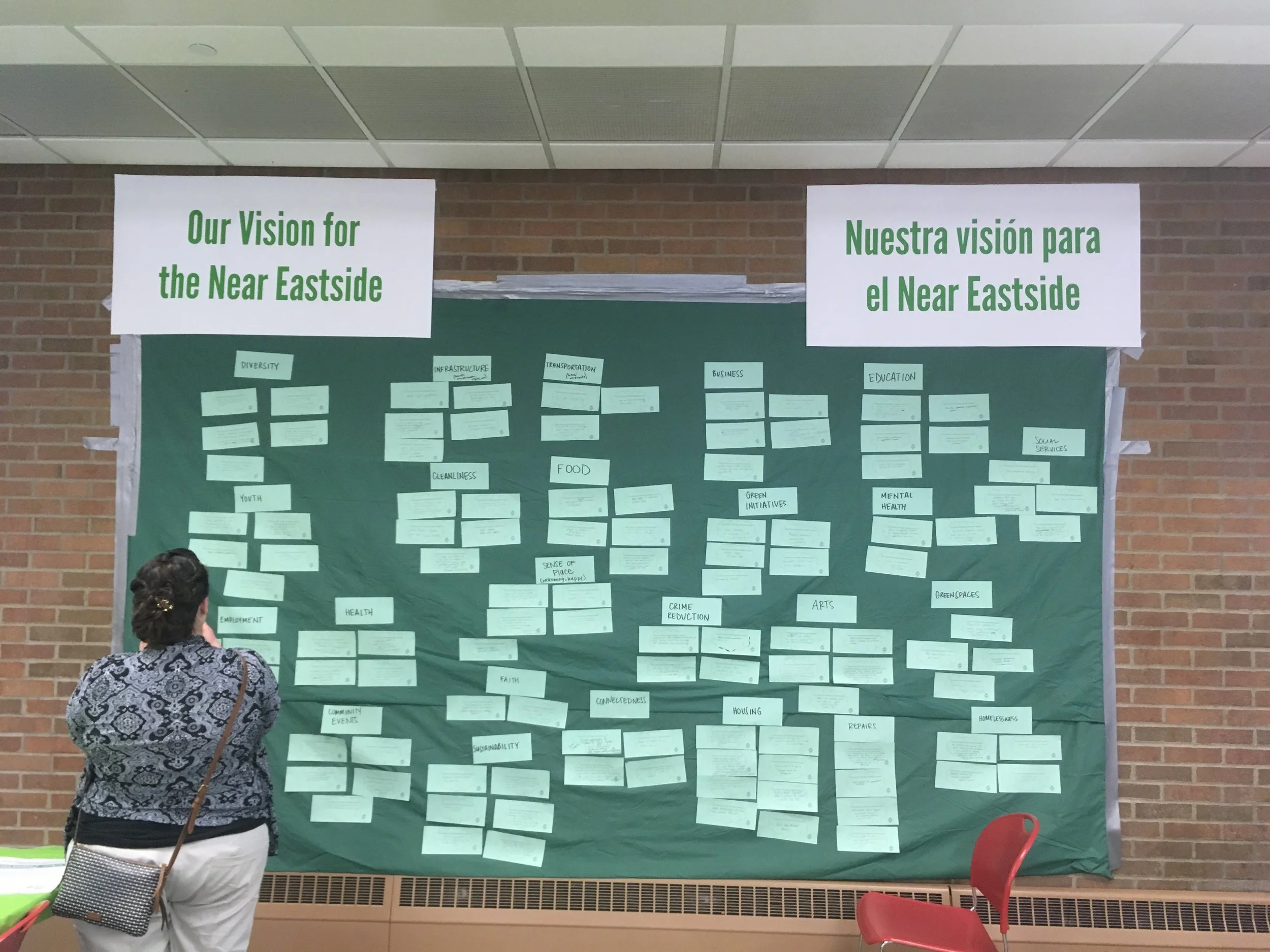
Read MoreWe’ve all heard it: Americans today are incapable of civil conversation. But for decades one urban neighborhood has been confounding expectations. For them, conversation has not only proven possible, it’s become the foundation for building a stronger, more resilient and better connected neighborhood.
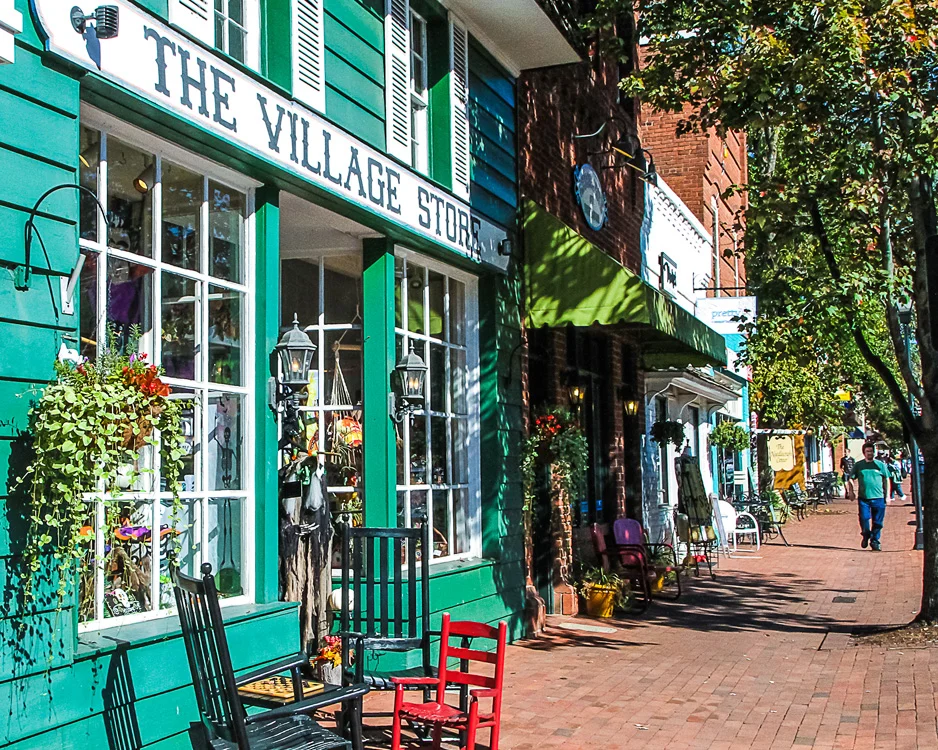
Read MoreA walk down a thriving main street like this one will be a reminder why our downtowns are worth protecting and nurturing.
Read MoreThink small acts of neighborliness mean nothing more than signs of a welcoming neighborhood? Discover how Strong Towns contributor Steve MacDouell introduced “micro-neighborliness” to shift the morale of residents in neighborhoods across London, Ontario.
Read MoreWe’ve been living for decades on the urban economic equivalent of anabolic steroids: it’s time for some good old-fashioned diet and exercise. The key is to reorient the way we approach growth. Instead of thinning out our cities and taking on more infrastructure liabilities, we need to wring real value out of the places we’ve already built.
Read More