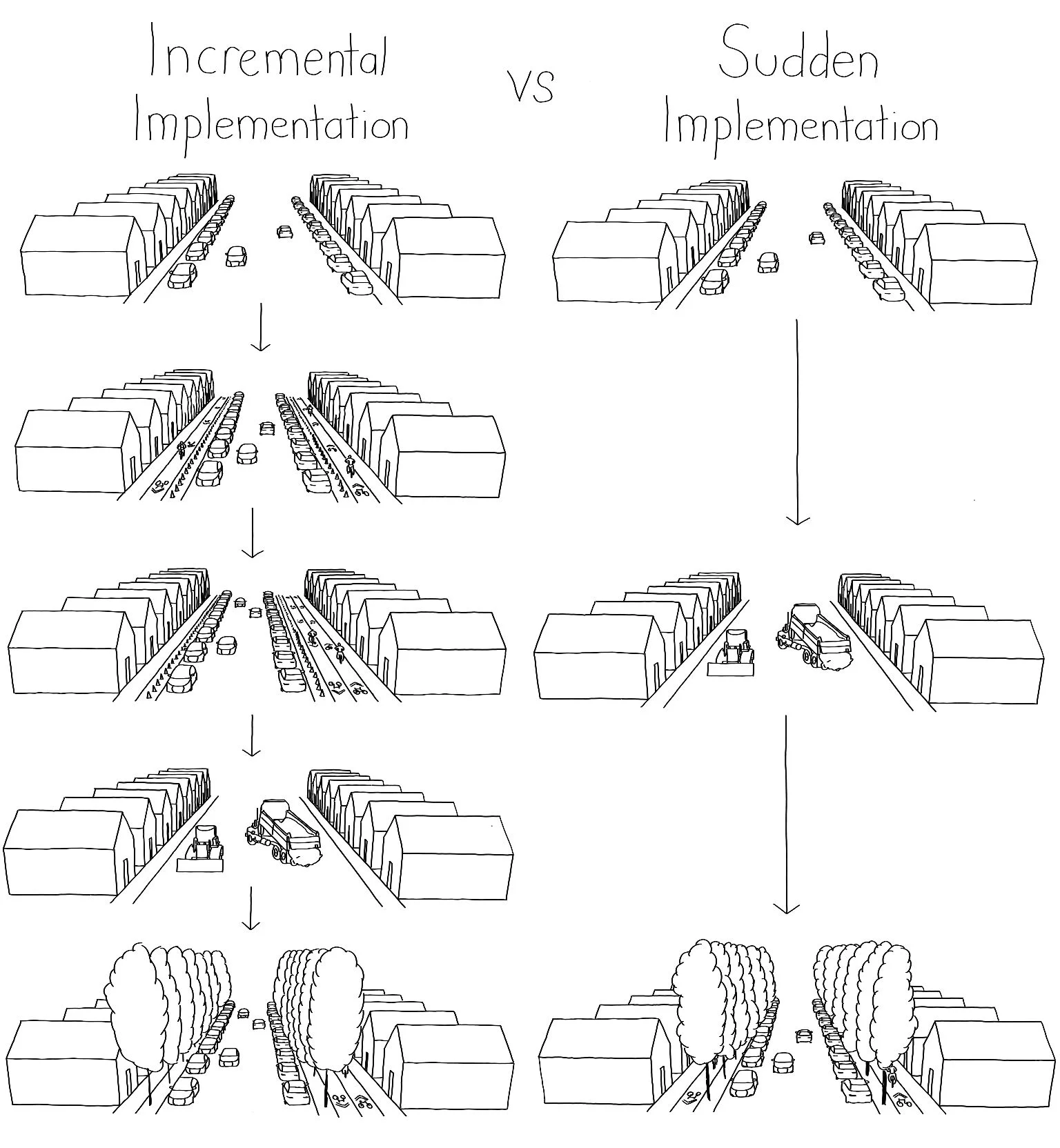
Incremental approaches are often cheaper, faster, or have less risk than sudden approaches. Let’s explore different types of incrementalism.
Read More
Incremental approaches are often cheaper, faster, or have less risk than sudden approaches. Let’s explore different types of incrementalism.
Read MoreEverything has a beginning, a middle, and an end. Our current institutions are in the process of failing and are unlikely to be reformed. Once the dust settles, we’ll create new institutions and a fresh cultural consensus that respond to pressing needs on the ground.
Read MoreIf your growth strategy only works as long as wealthy people live in your town, your growth strategy is deeply fragile.
Read MoreA tactical urbanism success in Cincinnati demonstrates the ability to solve problems on our streets—in this case, parking for dockless scooters—by rapidly prototyping solutions in low-cost, low-risk ways.
Read MoreIn working to create better places, keep the stakes low, so even skeptics are more willing to indulge some risk. Take a little step. Root the conversation in reality. Then adjust and press on to those big plans.
Read MoreIf we want to fix crony capitalism, what we really need is to localize capital.
Read MoreThis week, we dug into the gap between perception and reality when it comes to urban growth, spoke to business owners in a St. Louis suburb’s “Chinatown” on the verge of being evicted for tax-subsidized big box retail, reported on new research on who attends public meetings, dug into the many reasons a building might be vacant, and more.
Read MoreWe’re hosting a regional gathering in North Texas in October, and we’re assembling a line-up of local and national expert presenters. Our speakers bring a wealth of wisdom and experience in building strong towns, and we're proud to begin introducing them to you here!
Read MoreAs a cycling advocate, I avoid talking about the times when riding a bike in the city is scary, because I don’t want to deter would-be new riders from giving it a try. There’s only one problem with pretending I’m never afraid: it isn’t true.
Read MoreIn this podcast episode, Chuck interviews Corie Brown, Zester Media co-founder and a writer on the food system, about the depopulation of rural Kansas, as mechanized agriculture reduces the need for farm labor, and the social toll that it is taking in isolated, shrinking towns.
Read MoreIn an area where the population is growing, one question often vexes neighbors: why is that house or storefront vacant? It just doesn’t seem to make sense. Why do landlords leave properties empty when they could be getting rent?
Read MoreSomething as small as public art can help transform the public’s perception of a troubled neighborhood park. It’s a testament to the power of bottom-up, incremental change.
Read MoreUniversity City, Missouri, is on the verge of a terrible decision: a redevelopment deal that would displace dozens of homes and minority-owned businesses in its unofficial “Chinatown” for big-box retail subsidized through tax-increment financing.
Read MoreAs technology becomes cheaper and more commonplace, it’s not driving us away from cities. Rather, it’s making the other attributes of place—especially human capital, social interaction and quality of life—more valuable.
Read MoreIf you had five minutes to plant a seed in the mind of an influential leader in your community, what would you tell them? Or give them to read? What article do you wish Strong Towns would publish that would help you make a concrete, needed change in your own community?
Read MoreLess than 20% of the country lives in regions with high-quality transit systems that serve most of the population. There is a stark divide between the six or eight large metros that are the most urban in the United States, and everywhere else.
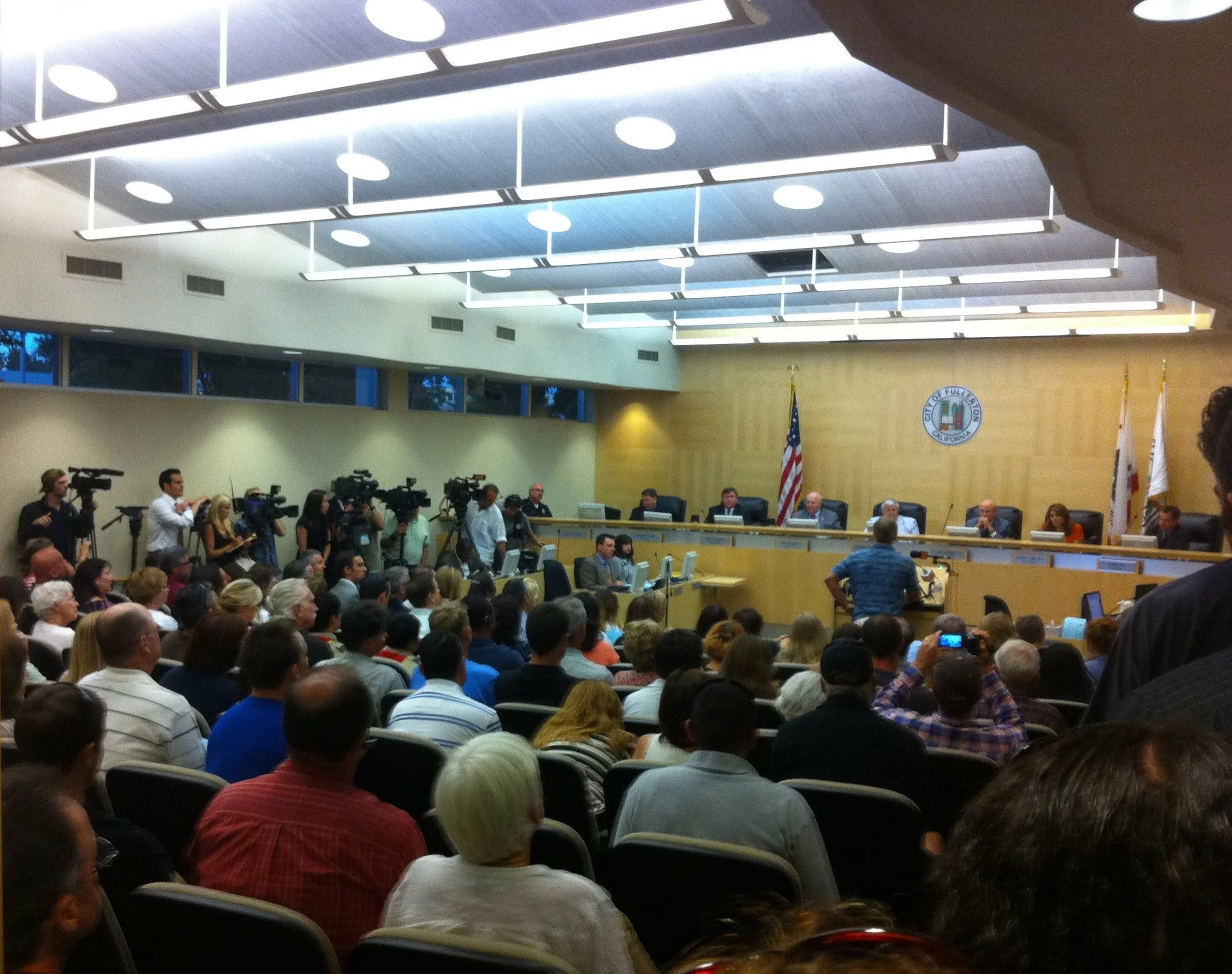
Read MoreNew research out of Boston University confirms that those who speak at local public hearings are not representative of the public as a whole. Elected officials seeking to understand constituents’ views should treat these hearings as only one source among many.
Read MoreWhat does it take to bring life back to a faded downtown? Contrary to conventional wisdom, big employers may underperform as revitalization engines, and small-bet approaches—improvisational, innovative, and low-risk—can deliver outsize rewards.
Read MoreThe belief that we’re going to radically transform our cities from the top down defies reality. Despite widespread anxiety about urban growth and change, the vast majority of places aren’t changing very much at all.
Read MoreThis week, we announced a new documentary about housing policy which features the work of Strong Towns, discussed why local governments need to make financially sound development decisions and avoid the risk of financial ruin at all costs, examined the pitfalls of suburban retrofit, shone a spotlight on Portland’s forward-thinking parking policies, and more.
Read More